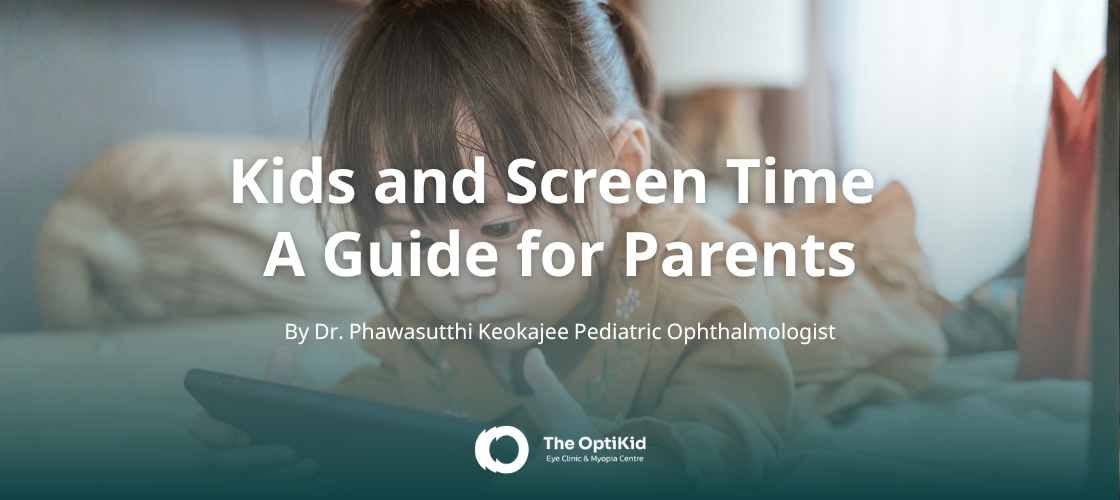
In today’s digital world, children are using screens earlier and for longer periods. On average, kids aged 8-12 spend 4 to 6 hours a day on devices. While screens offer education and entertainment, excessive use can lead to sleep issues, behavioral changes, and even an 8-fold increase in the risk of ADHD if used for more than 2 hours daily.
How Screens Impact Your Child’s Vision
It isn’t just an “old wives’ tale”—excessive screen time can cause serious eye health issues:
-Progressive Myopia (Short-sightedness): Looking at close objects for too long causes the eyeball to stretch. This increases the risk of sight-threatening conditions later in life, such as glaucoma, retinal detachment, or maculopathy. Surgery like LASIK fixes the vision, but it doesn’t reduce these risks.
-Acute Inward Squint (AACE): Constantly focusing nearby can cause the eyes to turn inward, leading to double vision that may require surgery.
-Digital Eye Strain: Long sessions lead to dry eyes, frequent blinking, eyelid twitches, and headaches.
High-Risk Habits
The danger increases when children use screens:
-Too close to the face (increases myopia risk by 14%).
-In the dark or poor lighting.
-In moving vehicles (like cars).
-For extended periods without a break.
A Note on Blue Light: There is currently no medical evidence that blue light filters or supplements slow down myopia. However, natural UV light does help! Spending 2 hours a day outdoors is one of the most effective ways to slow the progression of short-sightedness.
Recommended Limits by Age
-Under 1 year: No screen time at all (WHO recommendation).
-Under 2 years: Avoid screens, except for brief video chats with family.
-2-5 years: Limit to 1 hour on weekdays and 3 hours on weekends, with frequent breaks.
Tips for Safe Screen Use
To keep your child’s eyes healthy, remember these five steps:
1.The 20-20-20 Rule: Every 20 minutes, look at something 20 feet away for 20 seconds. For younger kids, just have them get up for a drink or a quick stretch every 30-45 minutes to let their eyes Reset, Refocus, and Relax.
2.Stay Hydrated: Encourage blinking to keep eyes moist. Use a humidifier if the room is very dry.
3.The 1-2-10 Rule: Maintain proper distance—1 foot for phones, 2 feet for computers, and 10 feet for TVs.
4.Screen Settings: Adjust brightness and contrast so they are comfortable. Ensure text size is large enough so they don’t have to squint.
5.Good Posture: Avoid lying down or tilting the neck while watching, as this causes muscle strain and eye fatigue (though not relevant to astigmatism).
Summary
While screens are a part of modern life, moderation is key. Encourage outdoor play, stick to the 20-20-20 rule, and ensure your child has a healthy environment for their digital discovery.

Dr. Phawasutthi Keokajee
Pediatric Ophthalmologist